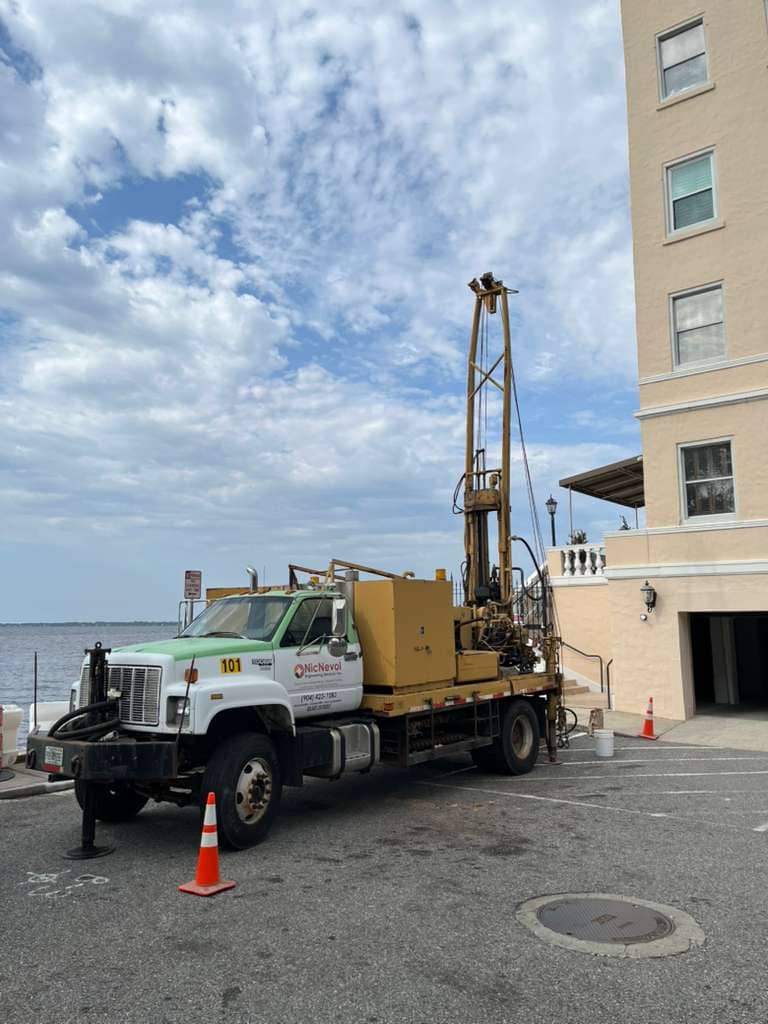
Before any construction project begins, one of the most important questions is: What is below the surface?
Whether the project involves a roadway, bridge, building, drainage improvement, utility corridor, or public infrastructure upgrade, understanding soil and groundwater conditions is essential. That is where geotechnical drilling services in Florida play a critical role.
Geotechnical drilling helps engineers, contractors, developers, and public agencies make informed decisions before construction begins. By investigating subsurface conditions early, project teams can reduce risk, improve design accuracy, avoid costly surprises, and support safer, stronger infrastructure.
For Florida projects, where soil conditions and groundwater levels can vary significantly from one site to another, reliable drilling and soil testing are essential parts of the engineering process.
What Is Geotechnical Drilling?
Geotechnical drilling is the process of drilling into the ground to collect information about soil, rock, and groundwater conditions. Engineers use this information to evaluate how the site will respond to construction loads, excavation, drainage, pavement, foundations, and long-term infrastructure performance.
During a geotechnical investigation, drilling crews advance boreholes at selected locations across the project site. Soil or rock samples are collected at different depths and reviewed by geotechnical professionals. These samples may also be tested in a laboratory to determine soil classification, moisture content, strength, density, and other engineering properties.
In simple terms, geotechnical drilling provides the “ground truth” engineers need to design with confidence.
Why Drilling Is Critical Before Construction Projects
Safety
Drilling helps identify weak soils, high groundwater, organic materials, or unsuitable subsurface conditions before construction begins.
Cost Savings
Early subsurface investigation can help reduce redesigns, delays, change orders, and unexpected construction costs.
Compliance
Public-sector and transportation projects often require documented geotechnical data to support design and construction decisions.
Safety
The stability and safety of a construction project depend heavily on subsurface conditions. If the soil is too soft, organic, loose, saturated, or unsuitable, it can affect foundations, pavement sections, embankments, retaining walls, drainage structures, and other infrastructure components.
A proper construction soil investigation in Florida helps identify these conditions before construction begins. This allows engineers to recommend appropriate design solutions, construction methods, and site preparation measures.
Cost Savings
Unexpected subsurface conditions can be expensive. If unsuitable soils, high groundwater, unexpected rock, or weak foundation materials are discovered during construction, the project may experience delays, redesigns, change orders, and increased costs.
Geotechnical drilling helps reduce uncertainty before construction starts. By understanding the site conditions early, owners and contractors can plan better, estimate more accurately, and reduce the likelihood of costly field surprises.
Compliance and Documentation
Many public-sector and transportation projects require geotechnical investigation as part of the design and documentation process. For projects involving FDOT, municipalities, counties, and local agencies, geotechnical data may support design recommendations, pavement evaluations, foundation analysis, construction quality control, and materials testing requirements.
Reliable FDOT geotechnical services require more than field work. They require proper documentation, experienced engineering review, and coordination with project requirements.
Types of Drilling and Testing Services
NicNevol Engineering Services, Inc. supports geotechnical engineering workflows that may include drilling coordination, field investigation, laboratory testing, engineering evaluation, and construction-phase support.
Soil Borings
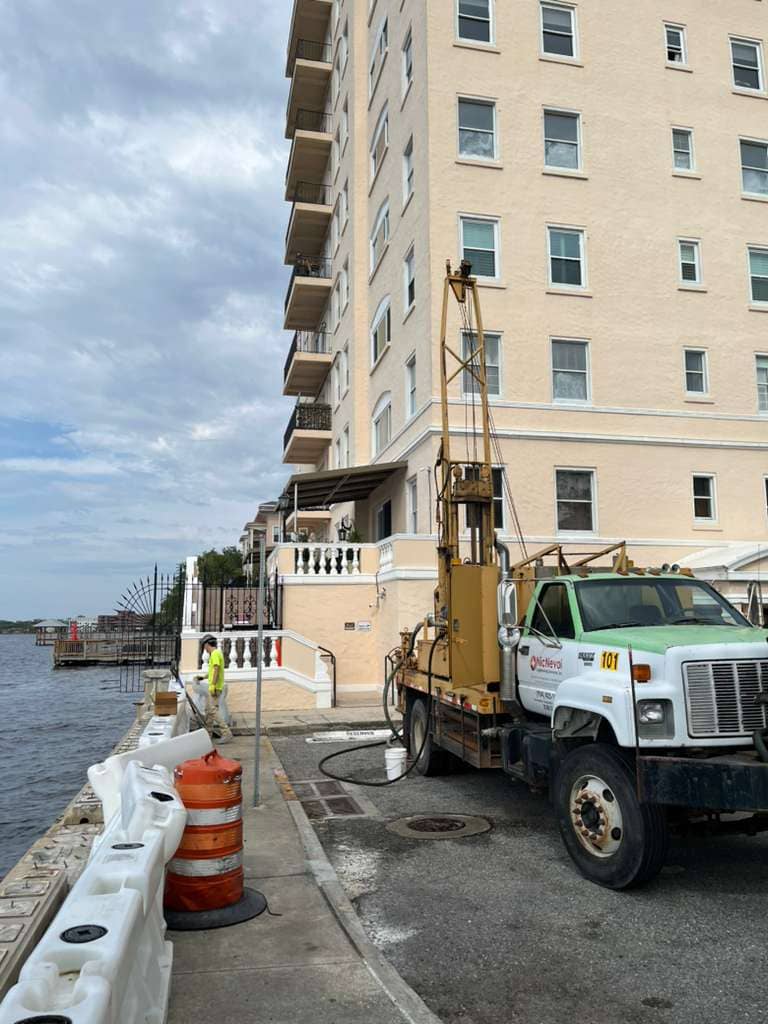
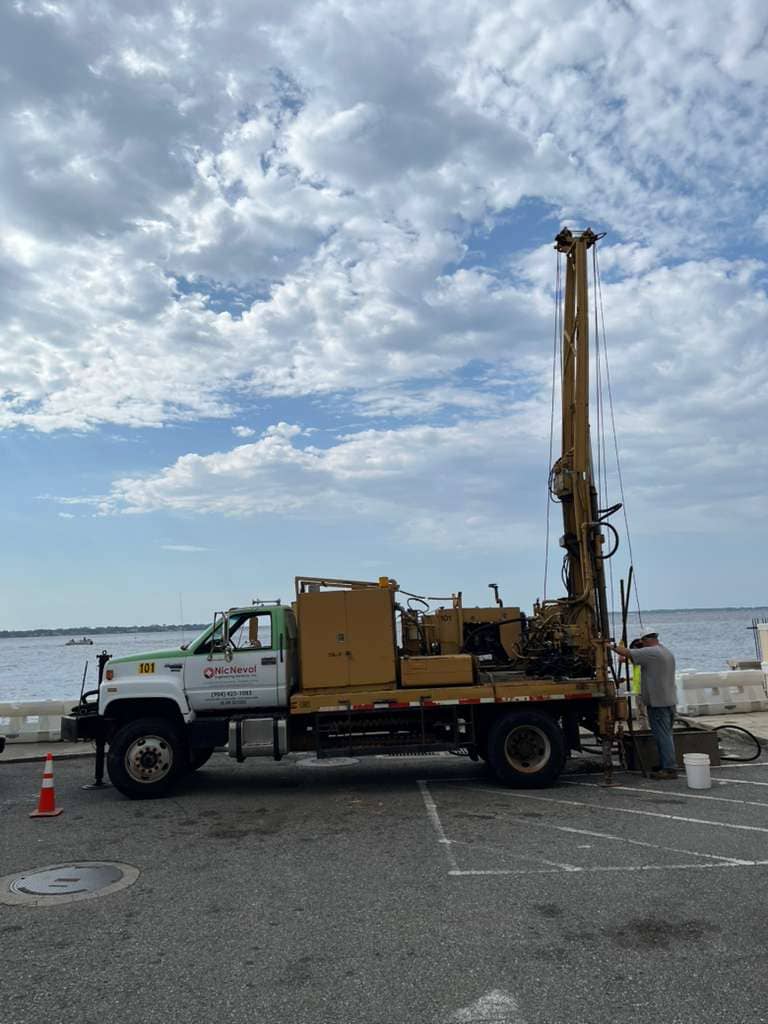
Soil borings are one of the most common methods used in geotechnical investigations. A drill rig advances a borehole into the ground, allowing field professionals to collect soil samples at specific depths.
These borings help identify:
- Soil layers
- Soil strength
- Groundwater conditions
- Organic or unsuitable materials
- Depth to rock or harder materials
- Conditions that may affect construction
Standard Penetration Testing, or SPT
The Standard Penetration Test, commonly known as SPT, is widely used in geotechnical engineering. During this test, a split-spoon sampler is driven into the soil, and the resistance is measured.
The results help engineers evaluate soil density, consistency, and strength. SPT data is commonly used for foundation recommendations, roadway and pavement design, bridge evaluations, embankment design, and subsurface characterization.
Rock Coring
When drilling encounters rock, rock coring may be performed. Rock coring collects cylindrical samples of rock so engineers can evaluate rock quality, depth, strength, and condition.
Groundwater Evaluation
Groundwater is a major consideration in Florida construction. High groundwater levels can affect excavations, drainage design, pavement performance, foundation recommendations, and construction sequencing.
How the Drilling Process Works
Project Review and Scope Development
The engineering team reviews the project type, location, proposed improvements, and design requirements. Based on the project needs, they determine the number of borings, boring locations, drilling depths, and testing requirements.
Site Access and Utility Coordination
Before drilling begins, the team coordinates site access and confirms utility clearance requirements. This step is essential for field safety and helps prevent conflicts with underground utilities.
Field Mobilization
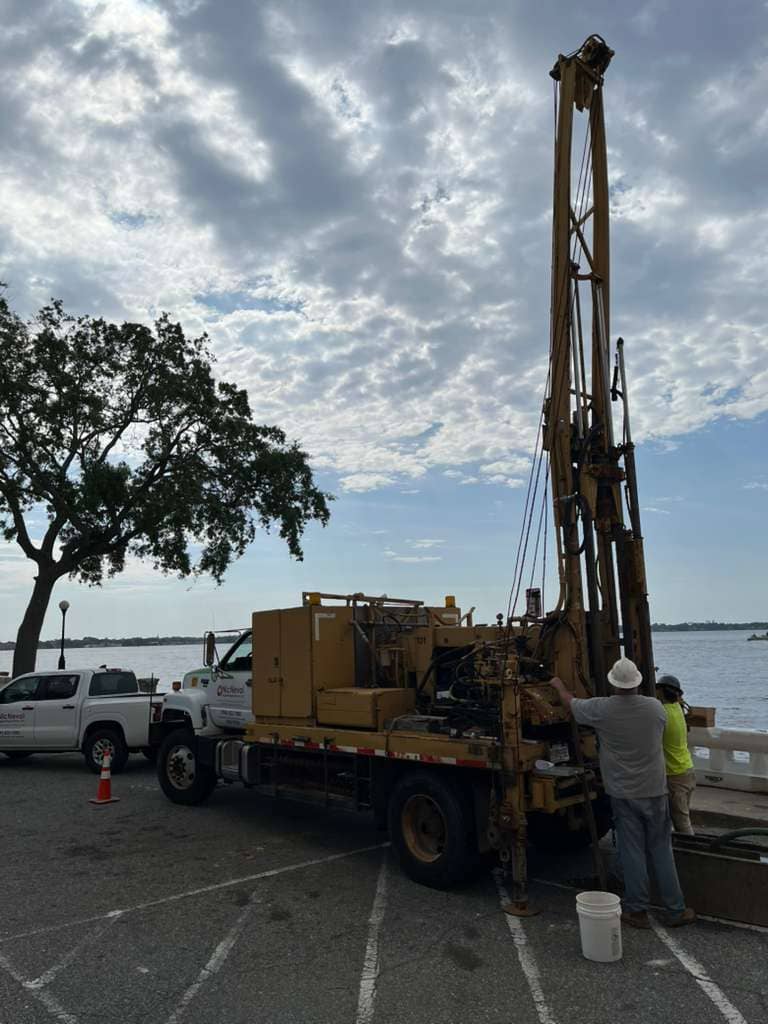
The drilling crew mobilizes the drill rig, sampling tools, and field equipment to the project site. Drilling may take place along roadways, on development sites, near drainage structures, at bridge locations, or within public rights-of-way.
Drilling and Sampling
The crew advances borings to the required depths and collects soil or rock samples at specified intervals. Field logs are prepared to document soil descriptions, sample depths, groundwater observations, and drilling conditions.
Laboratory Testing
Collected samples may be delivered to the laboratory for testing. Laboratory testing helps confirm soil properties and provides data for engineering analysis.
Engineering Analysis and Final Report
Geotechnical engineers review the field logs, laboratory data, project plans, and site conditions to develop recommendations for design, permitting, bidding, and construction planning.
Who Needs Geotechnical Drilling Services?
Developers
Developers need reliable subsurface information before moving forward with commercial, residential, industrial, and mixed-use projects. Geotechnical drilling helps developers understand site risks early and make informed decisions about foundations, pavement, utilities, drainage, and construction budgets.
Contractors
Contractors use geotechnical data to plan construction methods, estimate costs, and reduce uncertainty during bidding and construction. Accurate soil testing and drilling in Jacksonville, FL can help contractors anticipate excavation challenges, groundwater conditions, unsuitable soils, compaction requirements, and potential construction risks.
Government Agencies
Government agencies, including FDOT, municipalities, counties, and local authorities, rely on geotechnical drilling and testing to support public infrastructure.
These services are often needed for:
- Roadway improvements
- Bridge and structure projects
- Drainage improvements
- Sidewalk and safety projects
- Utility corridors
- Pavement rehabilitation
- CEI and construction verification
- Local agency program projects
Why Choose NicNevol Engineering Services?
NicNevol Engineering Services, Inc. is a Florida-based engineering firm supporting infrastructure, transportation, and construction projects through geotechnical engineering, materials testing, construction inspection, and CEI-related services.
Florida Experience
Florida’s subsurface conditions can vary widely depending on location. Coastal areas, urban corridors, wetlands, sandy soils, high groundwater, and developed sites can all present different challenges. NicNevol understands Florida project environments and the importance of practical, site-specific recommendations.
FDOT Prequalification and Public-Sector Experience
NicNevol’s experience with FDOT and public infrastructure projects allows the firm to understand the documentation, coordination, and quality expectations required for transportation-related work. This is especially valuable for clients working on FDOT, municipal, county, and local agency projects.
Integrated Engineering Services
NicNevol provides support across multiple related disciplines, including:
- Geotechnical engineering
- Construction materials testing
- Construction inspection
- CEI support
- Laboratory testing coordination
- Engineering recommendations
Reliable Coordination and Turnaround
In construction and infrastructure work, timing matters. Delays in drilling, testing, or reporting can affect design schedules, bid deadlines, permitting, and construction progress. NicNevol focuses on responsive communication, reliable coordination, and practical engineering support to help clients keep projects moving.
Service Area: Supporting Projects Across Florida
NicNevol Engineering Services supports clients across Florida, including:
- Jacksonville and Northeast Florida
- Gainesville and North Central Florida
- South Florida
- FDOT District project areas
- Municipal and county infrastructure projects
- Private development sites
Whether your project involves roadway improvements, drainage upgrades, site development, pavement evaluation, bridge support, or public infrastructure, NicNevol can provide the geotechnical drilling and soil testing support needed to move forward with confidence.
Frequently Asked Questions
What is the difference between geotechnical drilling and soil testing?
Geotechnical drilling is the field process of collecting soil, rock, and groundwater information from below the surface. Soil testing is the laboratory or field evaluation of those samples to determine engineering properties such as classification, moisture, density, and strength.
When should drilling be performed?
Drilling should typically be performed early in the design phase, before final design decisions are made. Early investigation helps reduce risk, improve planning, and support more accurate construction recommendations.
Do all construction projects need geotechnical drilling?
Not every project requires the same level of investigation, but many roadway, building, drainage, bridge, and infrastructure projects benefit from subsurface data. The required scope depends on project type, location, size, soil conditions, and regulatory requirements.
Does NicNevol support public-sector geotechnical projects?
Yes. NicNevol supports geotechnical engineering, materials testing, CEI, and construction-related services for public and private clients across Florida, including transportation and municipal infrastructure projects.
Contact NicNevol for Geotechnical Drilling Services in Florida
If your project requires geotechnical drilling services in Florida, soil testing and drilling in Jacksonville, FL, or a reliable partner for FDOT geotechnical services, NicNevol Engineering Services is ready to support your team.
Contact NicNevol